

Photo by Towfiqu barbhuiya on Unsplash
Assisting a client with medication is a common caregiver duty, but it must be done carefully. The goal is to support safe self-administration, not to independently medicate the client outside the caregiver’s allowed role.
A safe medication assistance routine includes hygiene, checking the correct medication and time, confirming the client’s identity, preserving privacy, helping with setup, observing the medication being taken, and documenting completion.
What medication assistance means
Medication assistance usually means helping a client take medications that have already been prescribed and prepared according to the care plan or facility rules. This can include:
Reminding the client that it is time for medication
Verifying the medication label and scheduled time
Setting up water and supplies
Handing the medication container or dispensed dose to the client
Observing that the medication was actually swallowed or otherwise taken as directed
Recording that the medication was taken
Caregivers should always follow state rules, employer policy, and the client’s care plan regarding what they can and cannot do.
Why proper medication assistance matters
Small mistakes can lead to missed doses, wrong doses, or safety problems. A structured process helps reduce risk and protects both the client and the caregiver.
Key safety goals include:
Giving assistance at the correct time
Making sure the medication label matches what is supposed to be taken
Supporting client dignity and privacy
Confirming the medication is actually taken
Creating an accurate record afterward
Step-by-step process for assisting with medication
1. Wash your hands first
Start with hand hygiene before handling medication supplies or approaching the client. This reduces contamination and supports infection control.
2. Gather needed supplies
Have everything ready before you begin. Typical items may include:
Gloves if required
The correct medication container
A medication administration record or other approved medication list
Water or another allowed beverage
A clean surface or overbed table
Preparing supplies in advance helps avoid interruptions once the process starts.
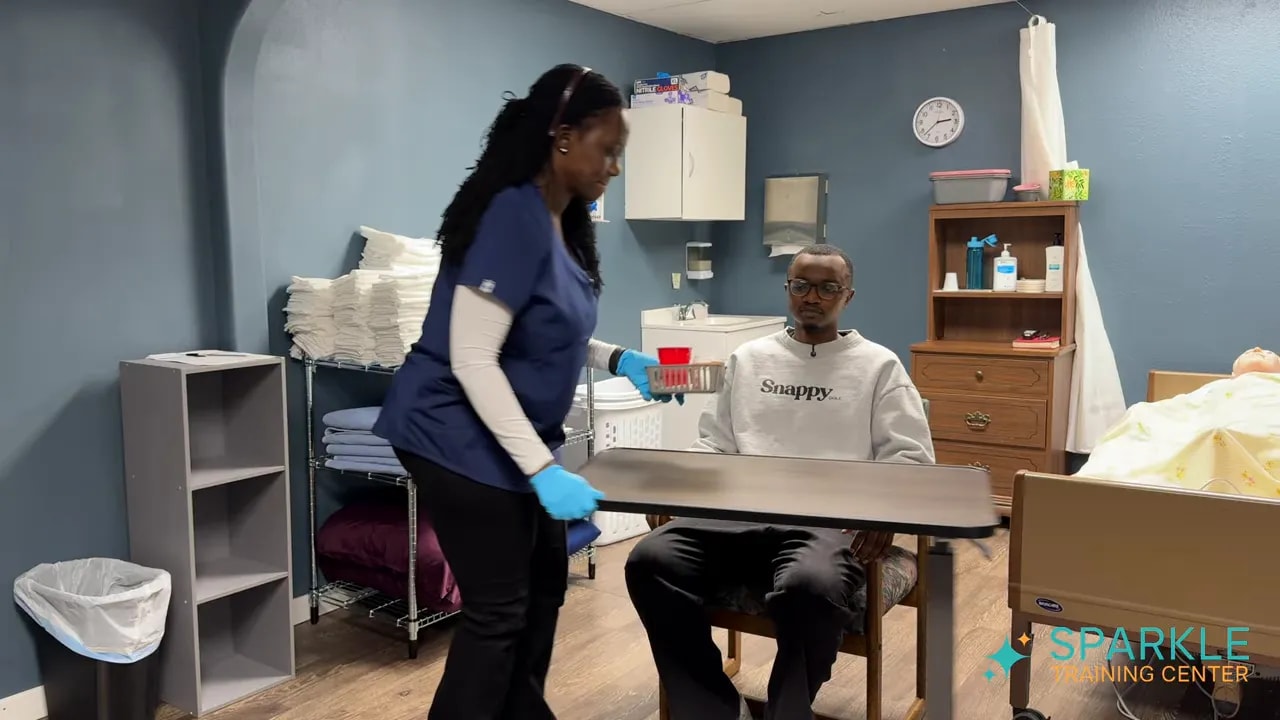
3. Check the medication before assisting
Confirm that the medication matches what the client is scheduled to take. Review the label and compare it to the medication record or instructions available to you.
At minimum, verify:
The right client
The right medication
The right time
The right dose
If anything does not match, stop and follow reporting procedures instead of proceeding.
4. Approach the client respectfully
Introduce yourself if appropriate and explain that you are there to assist with medication. Ask for permission before continuing. This supports consent and preserves dignity.
5. Provide privacy
Medication assistance should be done in a way that protects the client’s privacy. Close privacy curtains or otherwise limit unnecessary exposure before starting.
6. Confirm the client’s identity
Use the required identification process for your setting. A common standard is confirming two identifiers before assisting with medication.
Do not rely only on recognizing the person by sight.
7. Position the client and set up the area
Make sure the client is seated safely and can reach the medication and water. If needed, place an overbed table in front of them so supplies are stable and easy to access.
This is especially important for clients with weakness, limited mobility, or swallowing difficulty.
8. Dispense or set up according to your role and policy
Once everything has been confirmed, prepare the dose as allowed by your role. Keep the medication container and the amount being taken clearly organized so there is no confusion.
Avoid distractions during this step.
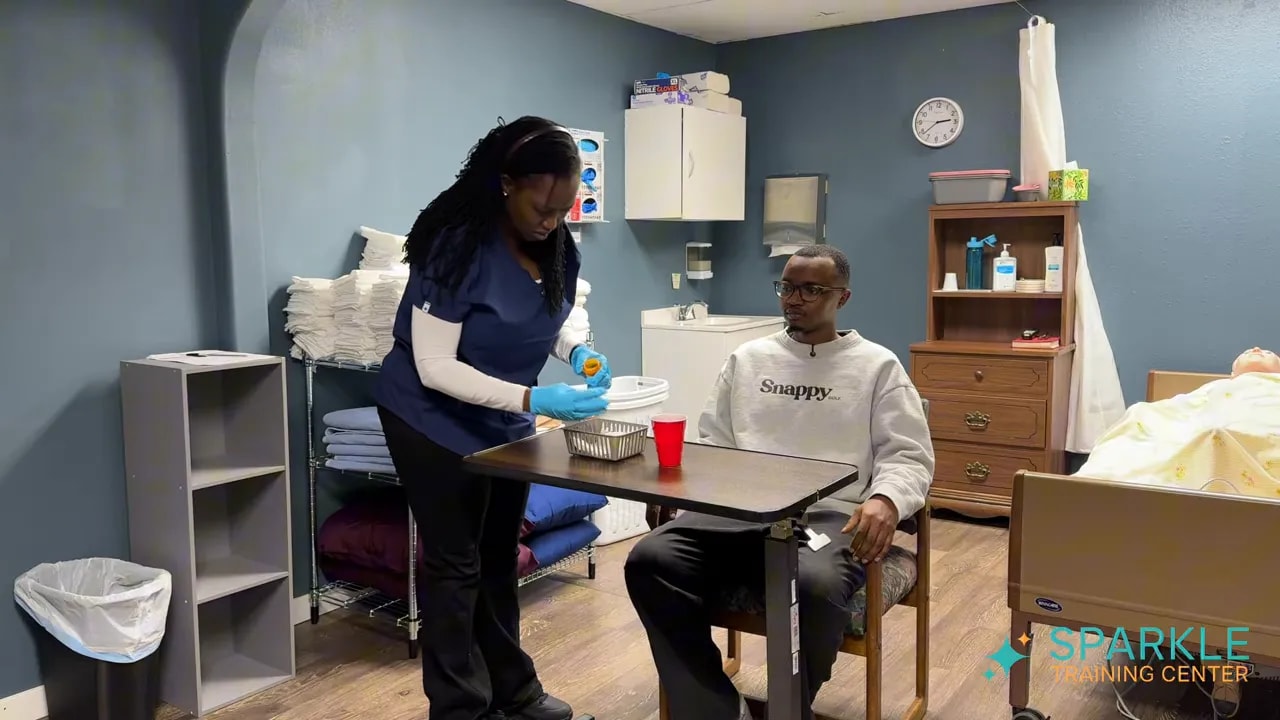
9. Hand the medication to the client and offer water
Assist the client in taking the medication. Offer water unless the medication instructions or care plan say otherwise. Some clients may need an extra sip to swallow comfortably.
10. Observe that the medication was taken
Do not assume the medication was swallowed just because the client accepted it. Confirm completion according to policy. In many settings, this includes visually checking that the medication has been swallowed.
This step helps prevent missed doses, pocketing, or partial administration.
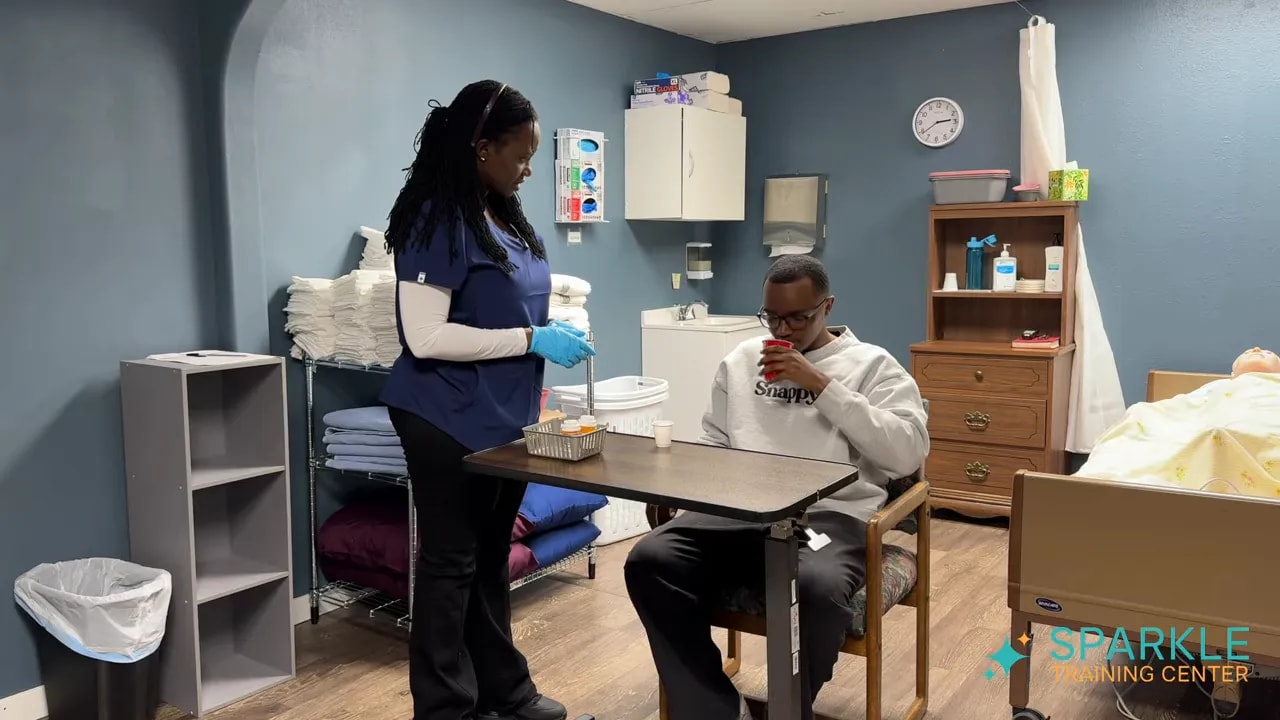
11. Ask if the client needs anything else
After the medication is taken, briefly check whether the client needs additional assistance. This is also a good time to ensure comfort and safety before leaving.
12. Leave the call button within reach
If the client uses a call button, place it where they can easily access it before you step away. This is a basic but important safety measure.
13. Clean up and secure supplies
Remove the water and medication supplies from the immediate area as appropriate. Return items to their proper storage location and make sure medication storage is secured according to policy.
14. Remove gloves and wash your hands
If gloves were used, remove them properly and discard them in the correct waste container. Finish with hand hygiene.
15. Document that the medication was taken
Record completion right away according to your workplace procedure. Documentation should reflect that the client took the medication as scheduled.
If there was any issue, such as refusal, vomiting, difficulty swallowing, or a mismatch in the label or schedule, report and document it according to policy.
Simple caregiver checklist for medication assistance
Wash hands
Gather gloves, medication, record, and water
Verify medication label, dose, and time
Introduce yourself and obtain permission
Provide privacy
Confirm the client’s identity with two identifiers
Set up a safe, reachable surface
Prepare the medication as allowed
Offer medication and water
Observe that the medication is swallowed
Check if the client needs anything else
Place the call button within reach
Clean up and secure supplies
Remove gloves and wash hands
Document immediately
Common mistakes to avoid
Medication assistance errors often happen when caregivers rush or skip a step. Watch for these common problems:
Skipping hand hygiene
Failing to check the label and scheduled time
Not confirming two client identifiers
Giving assistance without privacy
Leaving before confirming the medication was swallowed
Forgetting to leave the call button within reach
Delaying documentation
What to do if something does not look right
Stop and report concerns if:
The medication label does not match the record
The time is incorrect
The client says the medication looks different than usual
The client refuses the medication
The client has trouble swallowing
You are unsure whether the medication was actually taken
Do not guess or proceed when there is uncertainty. Follow your agency or facility reporting process.
Who this skill is especially important for
This process is especially relevant for:
Home care aides
Caregivers in long-term care settings
Students preparing for caregiver skills evaluations
Support staff who help with medication reminders and setup
It is also useful as a training checklist for supervisors and instructors reviewing safe medication assistance technique.
Key takeaway
Safe medication assistance is built on a consistent routine: prepare, verify, protect privacy, assist, observe, document. When each step is done in order, the client is safer and the caregiver is less likely to make an avoidable error.
If you are training for a home care aide or caregiver skills evaluation, practice the sequence until it becomes automatic. Accuracy, safety, and documentation matter just as much as the actual handoff of the medication.