
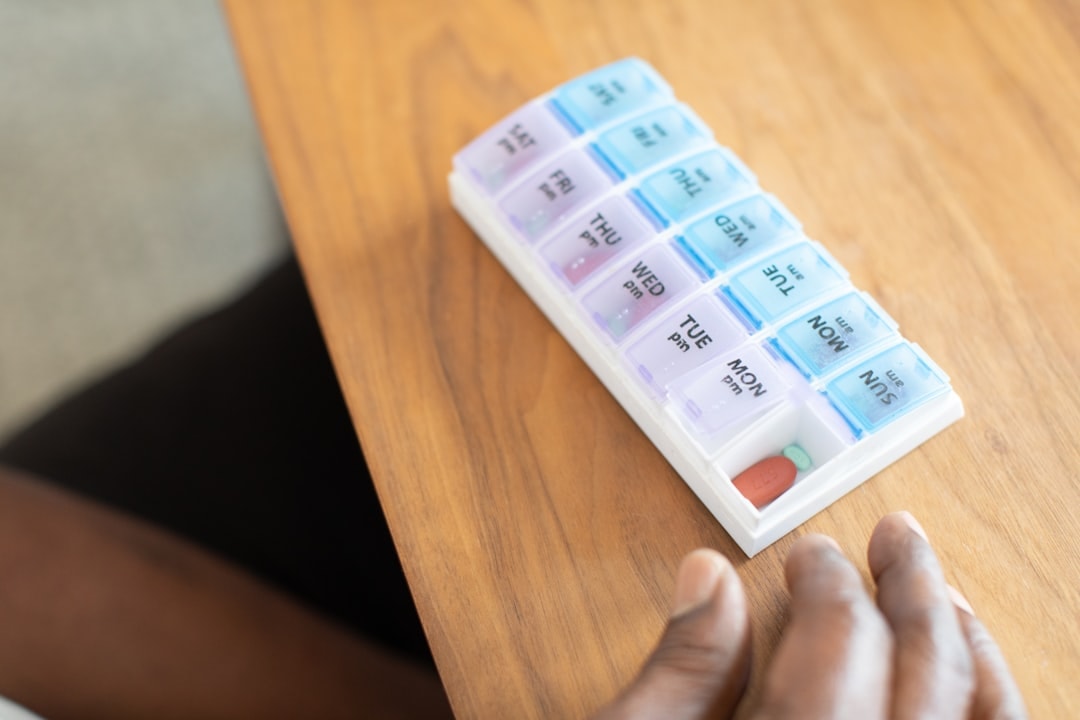
Daily medication reminders help seniors take medicines correctly, consistently, and safely. That matters because many older adults manage more than one health condition and may need several medications at different times of day.
When doses are missed, delayed, or accidentally repeated, treatment may not work as intended. A simple reminder system can reduce these risks, support independence, and make it easier to stay on track with a care plan.
What medication reminders actually do
A medication reminder is any tool or routine that helps a person take medicine exactly as prescribed. This can be as simple as a pill organizer or as structured as scheduled alarms and caregiver support.
The goal is not just remembering that medicine exists. The goal is remembering the right dose at the right time on a regular basis.
-
Consistency: helps medications work effectively over time.
-
Accuracy: lowers the chance of skipped doses or double doses.
-
Safety: reduces medication errors that can lead to health problems.
-
Clarity: gives healthcare professionals a more accurate picture of how well treatment is working.
Why seniors often need medication reminders
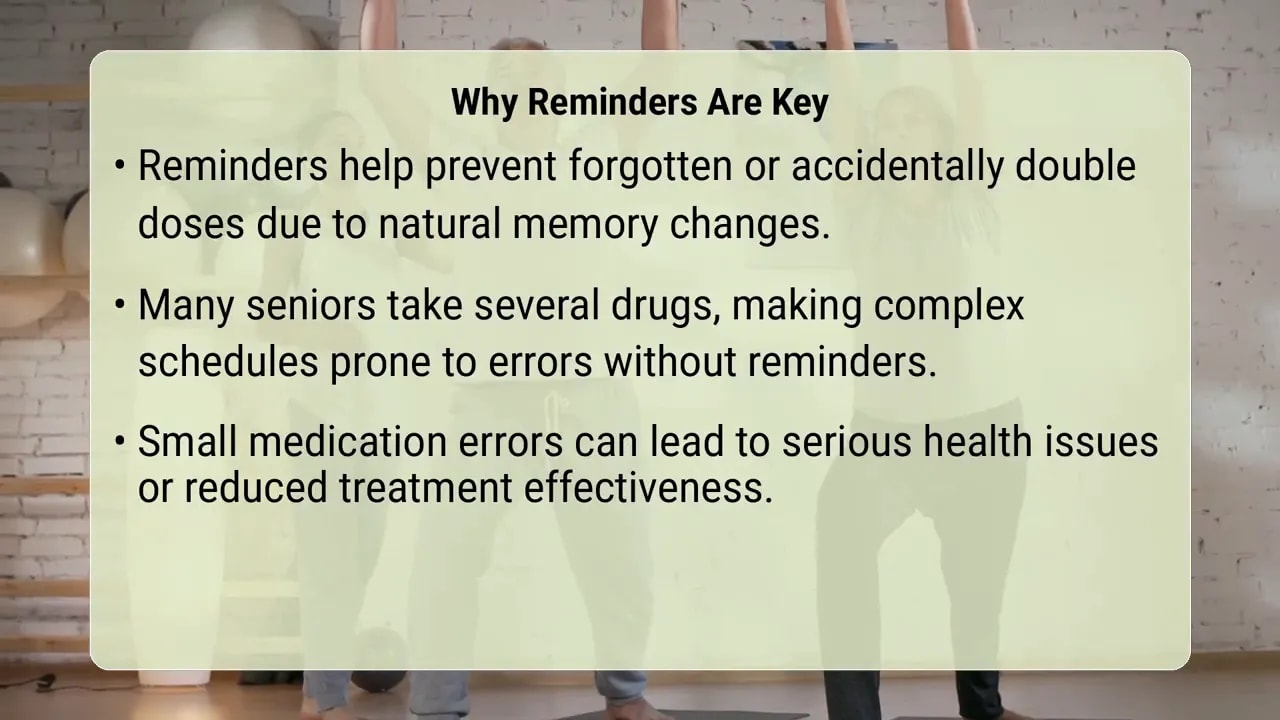
Medication routines can become complicated with age. Even highly organized people can struggle when several prescriptions have different instructions.
Memory can become less reliable
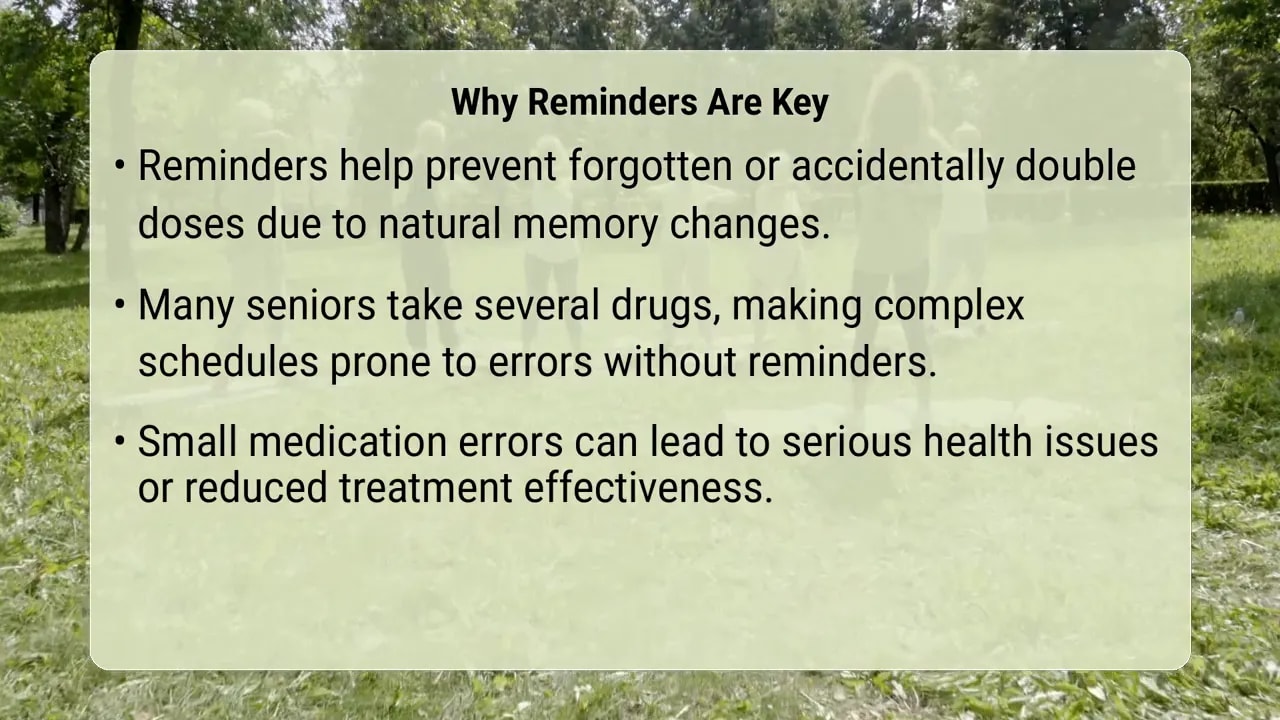
Natural changes in memory can make it easier to forget a dose, especially when days are busy or routines change. This is one of the biggest reasons reminders are useful.
Multiple medications create complex schedules
Many seniors take several medications each day. Some may be taken in the morning, some at night, and others at specific times. As the number of medications increases, so does the chance of mistakes.
Small errors can have serious consequences
Medication mistakes are not always minor. Missing a dose may reduce treatment effectiveness. Taking an extra dose may increase the risk of harmful reactions. Even a simple schedule mix-up can affect overall health.
How reminders improve medication adherence
Medication adherence means taking medicines exactly as prescribed. Daily reminders support adherence by making the routine easier to follow every day, not just when someone happens to remember.
Better adherence can help:
-
manage chronic conditions more effectively
-
prevent avoidable complications
-
reduce medication-related errors
-
support a better quality of life
For seniors, that can mean more stability, more confidence, and fewer setbacks caused by inconsistent medication use.
Health risks of missed or incorrect doses
The importance of reminders becomes clearer when you look at what can go wrong without them.
Reduced treatment effectiveness
If medication is not taken consistently, it may appear that the treatment is not working, even when the real issue is irregular use.
Accidental double dosing
Forgetting whether a dose was already taken can lead to taking it again. This can be especially risky when several medications are involved.
Adverse drug reactions
Medication errors can increase the chance of harmful reactions, particularly when multiple prescriptions are part of the routine.
Complications in chronic condition management
Many seniors rely on regular medication to manage ongoing health conditions. Skipped or incorrect doses can interfere with day-to-day stability and long-term treatment goals.
Why consistency helps doctors make better treatment decisions
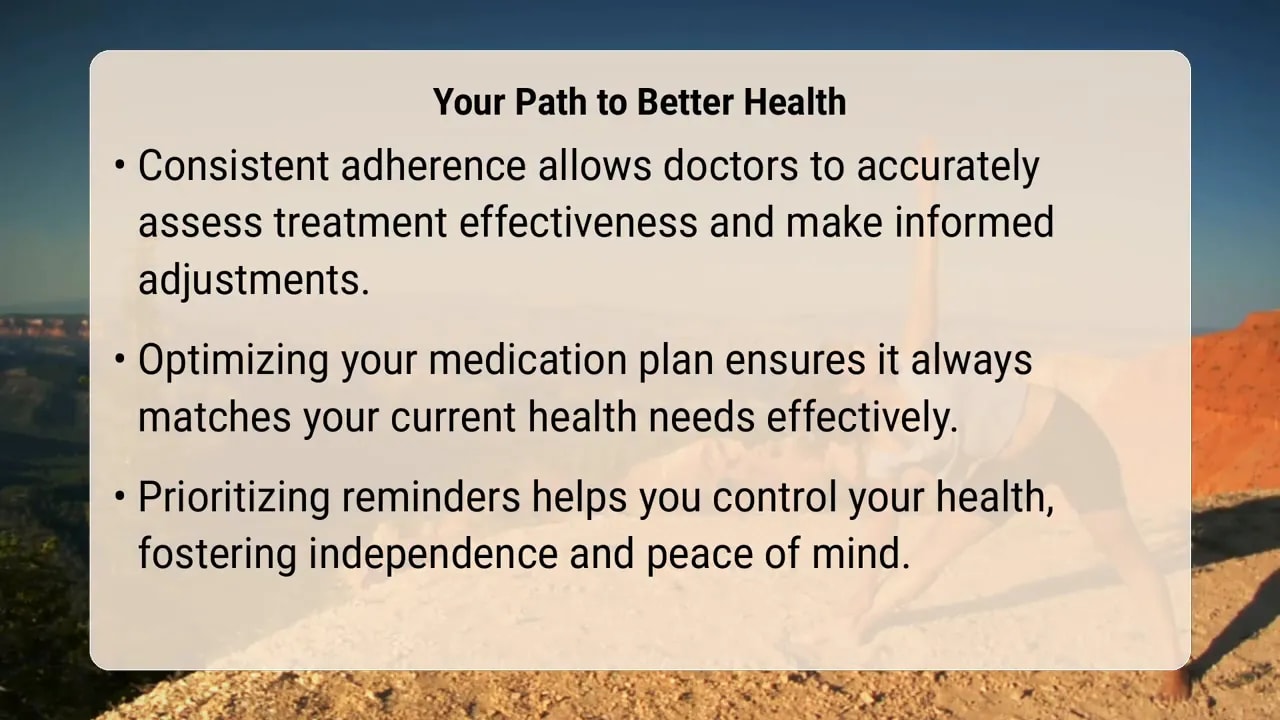
Consistent medication use does more than support daily health. It also helps healthcare professionals judge whether a treatment plan is actually working.
When medications are taken as prescribed, doctors can more accurately assess:
-
whether the current medicine is effective
-
whether the dosage needs adjustment
-
whether a different medication may be needed
Without consistent adherence, a medication may seem ineffective when the real issue is that it was not taken regularly enough to evaluate properly.
Simple medication reminder solutions that work
The best reminder system is usually the one that is easy to maintain every day. In many cases, simple tools are enough.
Pill organizers
Clearly labeled weekly or daily pill organizers provide a visual cue and help reduce confusion. They can make it easier to see whether a dose has already been taken.
Phone alarms
Scheduled alarms on a mobile phone can act as reliable prompts, especially for medications taken at the same times each day.
Smart speaker reminders
Voice-based reminders can be useful for people who spend most of their time at home and prefer audible prompts.
Dedicated medication reminder devices
Some people benefit from devices designed specifically for medication schedules. These can provide regular alerts and may be easier to use than general-purpose tech.
Support from family, caregivers, or healthcare professionals
Some seniors need more than a device or organizer. Help with setup, routine checks, or ongoing monitoring can provide peace of mind and make the system more dependable.
How to choose the right reminder system
Not every solution fits every person. A useful system should match the senior’s routine, comfort with technology, and number of medications.
Consider these questions:
-
Is the schedule simple or does it involve several doses a day?
-
Would a visual reminder work better than an audio reminder?
-
Is there a family member or caregiver available to help set it up?
-
Would a basic pill organizer be enough, or is a more structured system needed?
In many cases, combining tools works best. For example, a labeled pill organizer plus a daily alarm can add both visibility and timing support.
Common mistakes to avoid
Even a good reminder plan can fall short if it is too complicated or inconsistent.
-
Relying on memory alone: this increases the risk of missed or repeated doses.
-
Using an overly complex system: if the routine is hard to manage, it may not be used consistently.
-
Not labeling medications clearly: confusion is more likely when several prescriptions are involved.
-
Skipping support when needed: some people do better when a caregiver or family member helps monitor the routine.
-
Assuming an ineffective treatment is always the medication’s fault: inconsistent use can make a working treatment seem unsuccessful.
Who benefits most from daily medication reminders?
Medication reminders can help almost any senior taking regular prescriptions, but they are especially valuable for people who:
-
take multiple medications each day
-
have different dosing times throughout the day
-
sometimes forget whether they already took a dose
-
want to remain independent while managing their health more safely
Do medication reminders really make a difference?
Yes. Their value comes from reducing avoidable mistakes and supporting consistent adherence. That consistency is essential for treatment effectiveness, safety, and better health management overall.
Even simple reminder methods can make a meaningful difference when used regularly.
Key takeaway
Daily medication reminders are important for seniors because they support safe, accurate, and consistent medication use. They can help prevent missed doses, reduce the chance of double dosing, improve adherence, and give healthcare professionals a clearer picture of how well treatment is working.
For many older adults, the right reminder system is not just a convenience. It is a practical step toward better health, greater independence, and more peace of mind.